Universal TV Remote Control
- 0.0
- Rating
- 100.00K
- Installs
- Free
- Price
 Analysis by App-foxy
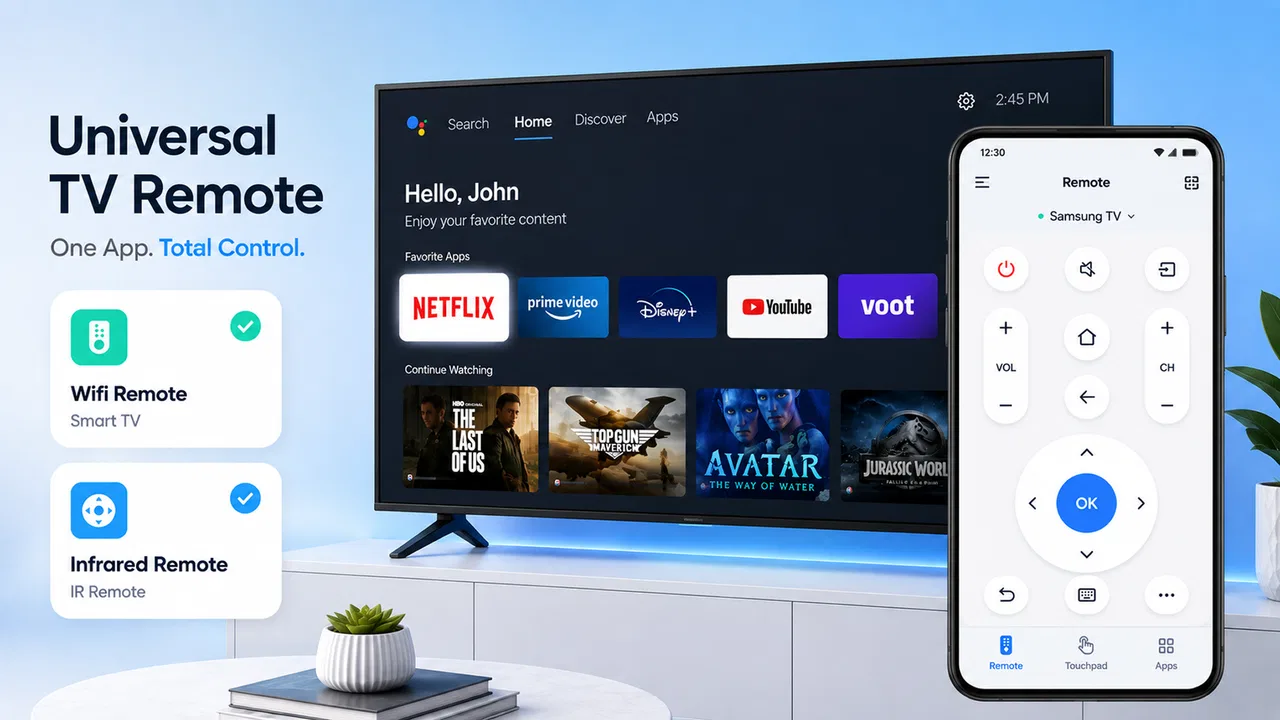
I tested Universal TV Remote Control with one main question in mind: does a phone-based remote make controlling a television genuinely easier, or does it simply replace one small device with another? The answer depends heavily on how you use your TV, but the app has a clear appeal. It brings remote control and screen mirroring into one House & Home app, which can be useful when the physical remote is missing, buried under cushions, or inconvenient to reach.
The most important capability here is the combination of universal TV control and screen mirroring. Those two functions serve different moments. A remote is about everyday commands, while mirroring is about putting phone content on a larger screen. Keeping both ideas together makes the app more practical than a basic remote replacement, although it also means the experience depends on how well your phone, television, and home network cooperate.
What the app is really useful for
Universal TV Remote Control is a free app from eXD Technology, aimed at people who want to control and cast to Smart TVs from a mobile device. It is listed for Everyone, so its purpose is easy to understand for a broad household audience rather than being aimed at a specialist or technical crowd. The app has passed the 100K+ install mark, which suggests that the idea is attracting real interest even though its displayed average rating is 0.0.
You May Also Like

 Blood Strike: 2.5 Anniversary
Blood Strike’s Loadouts Turn Every Drop Into a Tactical Gamble
A close look at Blood Strike’s custom loadouts: how fast access to signature weapons reshapes its battle royale rhythm, rewards preparation, and narrows the gap between fights.

 Pandora - Music & Podcasts
Pandora’s Music Is Easy to Start, but Harder to Recover
Pandora’s strength is its low-effort path from a seed to a station. Its weak spot is how much confidence it asks you to place in connection, setup, and quiet recovery.

 8 Ball Pool
 Is Built on Rivalries, Rematches, and Routine
A close look at the rivalries, rematches, shared routines, and unanswered safety questions that turn a quick pool match into a persistent mobile community.

 Samsung Music
’s Quiet Strength Is Playing What You Already Own
Its reach comes less from spectacle than from dependable access to a personal library. That simplicity is both the app’s strongest retention engine and its ceiling.

 AccuWeather: Weather Radar
AccuWeather Review: A Quick, Clear Forecast for Everyday Decisions
For everyday plans, the best forecast is the one you can understand quickly. AccuWeather makes rain timing, radar, and local conditions easy to act on, with a few trade-offs.

 Hill Climb Racing
Why Hill Climb Racing Still Turns Crashes Into One More Run
A tiny car, a bumpy hill and one more upgrade: Hill Climb Racing keeps resurfacing because its simple chaos makes every near-miss feel personal.
More From Our News Desk



I would not treat the install figure or the rating as a substitute for personal testing. They tell me that the app has reached a meaningful audience, but they do not explain whether it will connect smoothly to a particular television. That is the central practical issue with this kind of tool: “universal” describes the intended role, not a guarantee that every TV model will behave identically.
In everyday use, the appeal is straightforward. Instead of searching for a dedicated handset, I can reach for the phone I already carry. That is especially handy when several people share a living room and the remote has disappeared into another room. It can also be useful in a guest room, a rental property, or a home where the original controller has stopped working.
The screen-mirroring side changes the app from a simple emergency remote into something more flexible. A television is better for group viewing, while a phone is often where photos, short videos, or other personal content already live. Moving that content to a larger display can save the awkward step of passing the phone around. Still, I see mirroring as a secondary convenience rather than a replacement for every streaming app or every type of casting setup.
The real effect of combining control and casting
The useful detail is not merely that the app includes two functions. It is that control and casting can support the same viewing session. I might begin by using the phone as a remote, then switch to mirroring when I want other people to see something stored on the phone. Afterward, I can return to controlling the TV without picking up a second device.
That sounds minor, but it changes the rhythm of a shared viewing session. A physical remote is designed around buttons, while a phone-based app can keep the control surface close to other phone tasks. The trade-off is that the phone must remain available and unlocked when I need it. If the phone battery is low, someone else needs to use it, or notifications keep interrupting the session, the traditional remote remains more convenient.
The strongest reason to try this app is not novelty; it is reducing the number of objects needed for a casual TV session. That advantage is clearest in homes where the physical remote is frequently misplaced. It is less convincing for someone who already has a dependable handset on the coffee table and never needs to display phone content on the TV.
How I would use it in practice
I would begin by opening the app near the television and looking for the intended TV connection. The exact result will depend on the television and the home setup, so I would keep the TV switched on and make sure the phone is using the same home connection that the TV normally uses for smart functions. If the TV does not appear immediately, I would avoid repeatedly tapping through random options and instead check the simple things first: the TV’s network status, the phone’s connection, and whether the television is ready to accept a mobile controller.
This is one of the first points where a dedicated physical remote has an advantage. A handset normally communicates directly with its TV, while a phone app commonly relies on the smart features of the television and the local network. That can introduce a little setup friction. The app may be convenient once connected, but it is not necessarily the fastest solution when the television is offline or the home network is having a bad day.
Once control is available, I would use the app for ordinary viewing adjustments rather than expecting it to transform the TV interface. The phone is most valuable when I need a replacement controller, want to avoid hunting for the original, or am already holding the phone because I am preparing content to mirror. For repeated daily use, I would pay attention to how quickly I can reach the controls I use most. A phone screen can be less satisfying than tactile buttons when I am changing volume in the dark.
For mirroring, I would prepare the content before starting the cast. Closing unrelated apps, keeping the chosen photo album or video ready, and avoiding unnecessary switching can make the session feel more deliberate. This is a practical tip that is easy to overlook: the smoother the phone-side preparation, the less time the audience spends watching connection screens instead of the content itself.
I would also use mirroring selectively. It makes sense for showing a family photo, sharing a short clip, or presenting something that is already on the phone. It is not automatically the best route for long-form entertainment. A TV’s native application may provide better playback controls and a more stable viewing experience for supported services. In that situation, the app’s value is greatest as the controller, not as the main content-delivery method.
A realistic living-room example
Imagine a friend arrives with photos from a recent trip. The images are on the phone, but everyone is sitting across the room from the television. I could pass the phone around, but that turns a shared moment into a series of small individual views. With the app, I can use the phone to bring the images onto the larger screen, then keep the phone nearby to move through the session. That is a good example of the app solving a real household inconvenience rather than adding a feature simply because it sounds impressive.
There is another useful scenario: the original remote has vanished just before a film begins. Instead of searching every sofa cushion, I can try the phone app. If the TV and phone are already prepared for smart control, the replacement can be quick. If they are not, the setup may take longer than finding the remote, which is why I would install and test the app before an emergency rather than waiting for the exact moment it is needed.
That preparation is my first non-obvious recommendation. Treat the app like a spare key, not a fire extinguisher. A spare key is useful only if it works before the door is locked. Connecting it during a calm moment lets me discover whether my television responds properly and whether the phone is comfortable to use from the normal viewing position.
Where the convenience has limits
The word “universal” deserves a careful reading. I see it as a promise of broad purpose, not a reason to assume identical behavior across every Smart TV. Different television systems handle remote control and casting in different ways. Some may respond quickly, while others may require extra attention to network settings or connection prompts. That variability is not unique to this app, but it matters when deciding whether it should become the household’s only remote.
Network dependence is another important trade-off. A physical remote can still be useful when the internet service is down, provided the TV and remote communicate normally. A mobile solution can be more sensitive to the local setup. If the phone has moved to a guest connection, the TV is asleep in a way that blocks discovery, or the home router is separating devices, the app may not feel universal at that moment.
I would also keep expectations realistic about screen mirroring. Mirroring a phone display is not the same as turning the TV into a perfect copy of every mobile experience. Phone orientation, notifications, screen sleep, and the behavior of the source app can all affect what appears on the television. Before showing something to a group, I would enable a quiet viewing setup on the phone and check the first few seconds privately.
Phone control has a tactile limitation too. A physical remote lets me identify buttons by touch. With an app, I usually need to look down at the screen. That is fine when I am already using the phone for casting, but it can feel slower for repeated volume changes or quick pauses. Someone who watches TV with the phone charging in another room may find the traditional remote much less frustrating.
Cost is worth considering in the longer term. The app is free to download, but it includes optional in-app purchases ranging from $2.99 to $19.99 per item. I would not pay for anything until the basic connection and control experience worked well with my TV. For a simple backup remote, a paid upgrade may not be worthwhile. For someone who uses both control and mirroring regularly, the decision depends on whether the extra value is noticeable in that person’s routine.
The current version is 1.9, and the minimum requirement is Android 7.0. That makes the app accessible to many older Android phones, but compatibility still depends on the specific device and television combination. I would check the phone’s software before planning to use an older spare handset as a permanent controller. A phone that technically runs the app may still be too slow or inconvenient for a comfortable living-room experience.
When another option is better
I would choose the original remote when I need immediate, dependable button control, especially during a network outage or when several people need to operate the TV without sharing one phone. I would choose the television’s own casting support when I am watching content from a service that already has a reliable TV app. Native playback usually avoids the extra layer of mirroring and can preserve the controls designed for that service.
I would also skip this app as a primary solution if my TV is not a Smart TV or if my home setup makes device discovery unreliable. In that case, a replacement physical remote or a manufacturer-specific controller may be a better fit. The app is most persuasive where the television already supports the kind of connected interaction it is designed to provide.
One more practical trade-off is household ownership. If the app is installed on only one person’s phone, that person can become the accidental gatekeeper of the TV. A physical remote is shared by default. For a family, I would either install the app on the phones that are likely to be used or keep the original remote available as a backup.
Who will get the most from it
I think Universal TV Remote Control is best for people who regularly misplace remotes, already keep their phone nearby while watching television, or want an uncomplicated way to show phone content to a room. It is particularly appealing for casual household use, where the goal is convenience rather than replacing every function of a dedicated home-entertainment system.
It can also help someone who moves between rooms and does not want to carry a separate remote each time. A phone is already part of that person’s routine, so adding TV control feels more natural than maintaining another small device. The combination becomes more valuable when the same person occasionally needs to mirror photos or short clips for other people.
I would be more cautious recommending it to viewers who demand instant response, tactile buttons, or uninterrupted control in every network condition. Those users may prefer the original remote or a hardware replacement. I would also hesitate if the main goal is high-quality long-form streaming, because mirroring is not always the cleanest or most stable way to watch content that the TV can play natively.
The app’s Everyone rating makes it approachable for a shared home, but ease of use still depends on the first connection. I would help less technical family members complete that initial setup and then show them the few controls they actually need. That is another useful workflow: do not present the app as a full remote manual. Set it up, test control from the sofa, and keep the experience focused on volume, navigation, playback, and the casting action that the household will genuinely use.
My recommendation
I would recommend trying Universal TV Remote Control as a backup remote with a useful casting bonus, not as an automatic replacement for every TV accessory. Its strongest verified idea is the bridge between controlling a Smart TV and putting phone content on a bigger display. That bridge can make ordinary household moments easier, particularly when the physical remote is missing or a group wants to see something stored on one phone.
My advice is to test it before relying on it. Connect it during a quiet moment, try the main TV controls, attempt a small mirroring session, and see whether the phone remains comfortable to use from your normal seat. If those steps go smoothly, the app can earn a permanent place on the phone. If connection problems appear or tactile control matters more than casting, the usual physical remote remains the better choice.
For me, the app’s value comes from convenience with a specific purpose. It does not eliminate every limitation of phone-based TV control, and the optional purchases mean I would assess the free experience carefully before spending more. But for a household that wants one mobile tool for remote access and occasional screen sharing, eXD Technology’s app is a sensible option to test, especially when the alternative is searching for a lost remote every time the television needs attention.
My final view: Universal TV Remote Control is worth considering when your phone is already the device you reach for first. It is less compelling when your TV setup is offline, your original remote works perfectly, or you need the certainty of physical buttons. Used in the right situation, though, Universal TV Remote Control can turn a frustrating missing-remote moment into a manageable one and make sharing phone content with the room feel much more natural.
FAQs for Universal TV Remote Control
01Is Universal TV Remote Control compatible with all TV brands?
Universal TV Remote Control is designed to work with a wide range of TV brands, including popular ones like Samsung, LG, Sony, and Panasonic. However, compatibility may vary depending on the model and year of your TV. It’s advisable to check the app’s compatibility list or test it with your TV for confirmation.
02Does Universal TV Remote Control require an internet connection?
The app primarily uses IR (infrared) blasters or Wi-Fi to connect with your TV. If your smartphone has an IR blaster, you won't need an internet connection. However, if your TV and phone are connected via Wi-Fi, ensure both devices are on the same network for seamless control.
03How easy is it to set up Universal TV Remote Control?
Setting up Universal TV Remote Control is straightforward. After downloading the app, follow the on-screen instructions to select your TV brand and model. The app will guide you through a few steps to pair your devices, often taking just a couple of minutes to complete the process.
04Are there any in-app purchases or advertisements in Universal TV Remote Control?
While the basic functionality of Universal TV Remote Control is available for free, the app may include advertisements. Some features, such as removing ads or accessing premium controls, might require in-app purchases. Users can choose to upgrade for an ad-free experience and additional features.
05What should I do if Universal TV Remote Control doesn’t work with my TV?
If the app doesn’t work with your TV, first ensure both devices are properly connected (either via IR or Wi-Fi). Double-check that you've selected the correct TV brand and model. If issues persist, consult the app’s support section for troubleshooting tips or updates that may resolve compatibility issues.
Pros
- Easy to set up and pair with most devices.
- Supports a wide range of TV brands.
- User-friendly interface with intuitive controls.
- No need for multiple remotes; one app does it all.
- Offers voice control for hands-free operation.
Cons
- May not work with older TV models.
- Ads can be intrusive during use.
- Requires a stable Wi-Fi connection.
- Some features locked behind a paywall.
- Occasional lag in response time.

Universal TV Remote Control
Gallery